Picture this: your morning “commute” is an elevator ride, a quiet walk for coffee, and a quick hop on light rail if you need to cross town. If you’re eyeing an Uptown Charlotte address, that pace can be your every day. You want the energy and convenience of city living without surprises about costs, parking, or building rules. In this guide, you’ll get a clear view of the high‑rise lifestyle in Uptown, from condo types and price ranges to transit, daily routines, and what to check before you buy. Let’s dive in.
Uptown at a glance
Uptown, also called Center City, sits inside the I‑277 loop and is traditionally organized into four wards. Each ward offers a different mix of uses: First Ward includes civic and arts spaces and First Ward Park, Second Ward is convention and hospitality heavy, Third Ward features stadiums and parks, and Fourth Ward has a historic residential core. You can explore how the city frames these subareas on the official Uptown communities page at Uptown Charlotte.
You’ll be living next to a deep lineup of cultural and entertainment anchors. Museums and venues around Uptown include the Mint Museum, Bechtler Museum, Levine Center campus, Discovery Place, NASCAR Hall of Fame, Romare Bearden Park, First Ward Park, and Fourth Ward Park, plus major sports at Bank of America Stadium, Spectrum Center, and Truist Field. For a broad overview of what’s here, see the Uptown Charlotte summary.
What high‑rise living looks like
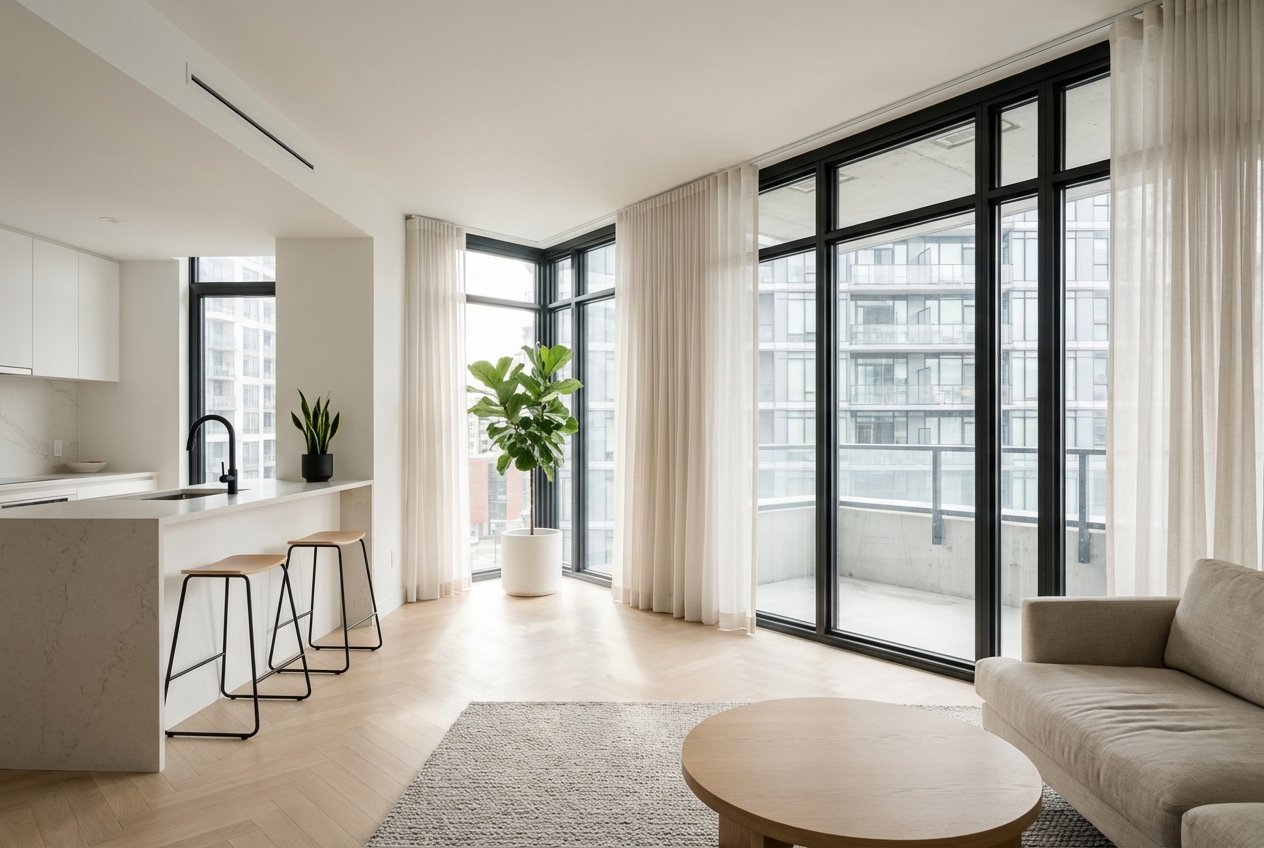
Uptown’s housing stock centers on high‑rise and mid‑rise condominiums, loft conversions, and newer full‑amenity towers. Typical condo buildings offer concierge service, rooftop or sky lounge spaces, fitness centers, and secure garage parking. You’ll also find a handful of townhomes and a small pocket of traditional homes in Fourth Ward.
If you want to browse a representative luxury address, take a look at The Ratcliffe to get a feel for lobby experience, finish levels, and proximity to parks and dining. Other well‑known condo names you’ll hear in conversations and listings include Fifth & Poplar and 230 South Tryon. Amenities and HOA rules vary by building, so plan to compare details closely.
Market snapshot and recurring costs (updated Feb 2026)
As of early 2026, active Uptown condo listings span a wide range. Smaller or older units often start in the low $200,000s, many one to two bedroom homes fall in the high $300,000s to $400,000s, and larger luxury residences and penthouses can reach $1 million or more. Prices vary by building, floor, view, and renovation level, and inventory changes week to week.
Monthly HOA dues also vary widely. In Uptown, it’s common to see fees that range from a few hundred dollars per month to well over $1,000 in fully amenitized towers. Some buildings assess additional charges for parking, storage, and guest parking. Plan to verify every line item in the building’s resale packet before you finalize your offer.
Mecklenburg County’s adopted property tax rate for FY2026 is 49.27 cents per $100 of assessed value. Total property tax for a city address also includes the City of Charlotte’s municipal rate, so your actual bill will be higher than the county portion alone. You can review county budget context and rate information at the Mecklenburg budget overview.
Quick cost example
- Scenario: assessed value of $400,000.
- County portion only at 0.4927 percent equals about $1,971 per year, or roughly $164 per month.
- Add the City of Charlotte’s rate, your building’s monthly HOA, any parking or storage fees, condo insurance, and your loan payment to estimate a complete monthly cost.
- Always confirm the exact assessment, current tax rates, and HOA details before closing.
Walkability and daily life
Core Uptown blocks, especially in and around zip code 28202, are among Charlotte’s most walkable areas. Walk Score maps rate many core spots in the high 80s to 90s, which means you can reach daily errands, coffee, restaurants, and cultural venues on foot. Scores vary block by block, and walkability can taper at the edges where surface parking breaks the grid. You can check block‑level ratings on Walk Score’s Charlotte map.
Dining, parks, and culture close by
You’ll have a quick walk to museums, theaters, and parks like Romare Bearden Park, First Ward Park, and Fourth Ward Park, plus live sports and concerts at major venues. The Market at 7th Street and a mix of independent cafés, bars, and restaurants bring steady energy to evenings and weekends. For a one‑page primer on the cultural lineup, skim the Uptown Charlotte overview and then explore local venue calendars.
Transit and commuting
Living in Uptown makes many trips car‑optional. You have the LYNX Blue Line light rail and the CityLYNX Gold Line streetcar, plus multiple bus routes and the Charlotte Transportation Center hub. Key stops in and around Uptown include 7th Street, 9th Street, Brooklyn Village, and Gateway/CTC. Route maps and how‑to guides for riding are available on the city’s CATS rail page.
For regional context, Charlotte’s citywide mean travel time to work is about 24.7 minutes based on recent American Community Survey data, which underscores how centrally located Uptown is for intracity trips. You can review the figure on Census QuickFacts. Charlotte Douglas International Airport sits roughly 7 to 10 miles from Uptown, with typical non‑peak drive times of about 15 to 25 minutes.
A weekday and an event night
On a typical weekday, you might walk 5 to 10 minutes for coffee, hit a fitness center in your building, and walk or ride light rail to the office. After work, grocery stops, casual dinners, and museum hours are often a short stroll from your lobby. If you travel for work, rideshare pickups and the airport run are usually straightforward.
On event nights, expect more foot traffic, street activity, and parking surcharges near stadiums and arenas. Restaurants often book up quickly on NFL, MLS, NBA, and concert dates. That energy is part of Uptown’s draw, but it also means planning ahead for reservations and timing. City partners announced targeted cleanliness and public‑realm investments in late 2025, which you can read about in this Axios update.
Buyer checklist for Uptown condos
Before you write an offer, use this checklist to avoid surprises:
- HOA governance and reserves. Review bylaws, the most recent reserve study, and meeting minutes. Ask about any planned capital projects or special assessments, current insurance deductibles, and how often dues have increased.
- Rental and short‑term policies. Clarify rules for leasing and whether short‑term rentals are allowed, capped, or prohibited. Rules can affect resale and cash flow.
- Parking and storage. Confirm how many deeded or assigned garage spaces convey, whether guest parking is available, and any monthly fees for parking or storage. Garages and guest access policies vary widely by building.
- Sound and lifestyle fit. Visit at different times of day, especially during a game or concert night, to gauge noise and lobby activity.
- Walkability and transit access. Map your daily routes to work, favorite gyms, parks, and rail or streetcar stops. Check station proximity such as 7th Street, 9th Street, Brooklyn Village, and Gateway/CTC.
- True monthly cost. Add principal and interest, HOA dues, parking or storage fees, condo insurance, and property taxes. Use the county’s FY2026 rate as a starting point and verify the current city rate at the time you buy. See the Mecklenburg budget overview for rate context.
- Resale position. Compare recent sales in your building and nearby towers to understand price stratification by amenity set and unit size. Inventory shifts with market cycles, so refresh comps right before you offer.
Pros and cons of the Uptown high‑rise life (Feb 2026)
Pros
- Walkability to offices, parks, museums, arenas, and dining.
- Transit access on LYNX Blue Line and CityLYNX Gold Line.
- Full‑amenity buildings with concierge, gyms, and rooftops.
- Shorter intracity commutes and quick airport access in off‑peak windows.
Cons
- HOA dues can be higher in amenity‑rich towers.
- Parking can be limited, and guest parking often has rules or fees.
- Event‑day crowds may bring noise and congestion.
- Prices vary widely by building and floor, so due diligence is key.
Representative options to watch
Here is how inventory often breaks down in Uptown as of early 2026. Exact availability changes weekly.
- Entry access. Smaller studios or one bedroom homes in older or modestly amenitized buildings, often starting in the low $200,000s to $300,000s. Good for a pied‑à‑terre or first purchase near the office.
- Core midrange. One to two bedroom residences in mid‑ to high‑rise towers that include concierge, fitness centers, and common outdoor spaces, frequently in the high $300,000s to $500,000s depending on size and view.
- Luxury tier. Larger residences and penthouses in premium addresses like The Ratcliffe and other full‑service towers, commonly $700,000 to $1 million plus with upgraded finishes and skyline views.
When you shortlist buildings, compare HOA health, parking, pet rules, leasing policies, and what your monthly fee actually covers. A higher fee can be worthwhile if it offsets separate gym memberships, security costs, or utility line items.
How we help you move with confidence
You deserve a smooth Uptown move that fits your budget and lifestyle. The Dearing Team pairs hyper‑local guidance with SERHANT.‑powered marketing, so you get fast access to opportunities, clear cost breakdowns, and a plan that matches your timeline. If you need flexibility to buy before you sell, ask about our programmatic options, including home trade‑in, guaranteed‑offer pathways, and lease‑to‑purchase solutions. We will help you analyze buildings, review HOA packets, and compare true monthly costs so your choice is informed and stress‑reduced.
Ready to explore Uptown condos, tour buildings, or get a pricing brief for your current home? Connect with SERHANT. North Carolina to get started.
FAQs
What areas does “Uptown Charlotte” include?
- Uptown covers Charlotte’s Center City inside the I‑277 loop and is traditionally divided into four wards with distinct mixes of civic, residential, entertainment, and hospitality uses; see the city’s framing on Uptown Charlotte’s communities page.
How walkable is Uptown for daily errands?
- Core blocks in and around 28202 often score in the high 80s to 90s on Walk Score, which supports coffee runs, dining, museums, and short‑trip errands on foot; check your exact address on Walk Score.
What transit options serve Uptown condos?
- You can ride the LYNX Blue Line light rail, the CityLYNX Gold Line streetcar, and multiple bus routes through the Charlotte Transportation Center, with nearby stops such as 7th Street, 9th Street, Brooklyn Village, and Gateway/CTC; see CATS rail info.
What should I budget for HOA dues in Uptown?
- Dues vary widely by building and amenity set, from a few hundred dollars per month to $1,000 plus in luxury towers; verify the exact amount and what it covers in the building’s resale packet and recent HOA minutes.
How close is Uptown to the airport, and what are typical drive times?
- Charlotte Douglas International Airport is about 7 to 10 miles from Uptown, with typical non‑peak drive times of roughly 15 to 25 minutes; timing can extend during rush hours or major events.
Are short‑term rentals allowed in Uptown condo buildings?
- It depends on the building; some HOAs prohibit or cap short‑term rentals while others allow them with restrictions, so confirm current rules and any approval processes in the HOA documents before you buy.