By The Dearing Team
Charlotte’s street grid tells a real story, starting at Trade and Tryon, where the city’s earliest routes converged and today’s Uptown blocks still radiate outward. Many of the names on street signs reflect the city’s original settlement era, while others mirror the growth of streetcar suburbs like Dilworth and Myers Park.
This guide shares Charlotte streets fun facts that connect everyday drives with the history, design, and real estate character that make each corridor feel distinct.
Key Takeaways
- High-altitude origins where the natural ridgeline at Trade and Tryon created the "Uptown" designation.
- Ecclesiastical naming patterns where major roads like Sharon and Providence led to pioneer churches.
- Nautical loops in landlocked neighborhoods, including the famous "Booty Loop" of Myers Park.
- Historical shifts where colonial trading paths evolved into the modern arteries of Interstate 85.
The Ridges Of Uptown
The intersection of Trade and Tryon sits on a natural plateau between Irwin and Sugar Creeks, creating a geographic high point that defined the city's early development.
Facts Behind The Uptown Elevation
- Trade And Tryon: This primary crossroads sits on the highest contours of a natural ridge, which served as a major Native American trading route long before European settlement.
- Compass Defiance: Tryon Street does not align with the traditional north-south compass directions because it follows the original diagonal path of the Nation’s Path.
- Official Proclamation: The Charlotte City Council passed a formal resolution in September 1974 to ensure the business district was forever known as Uptown.
- Bronze Benchmarks: Four massive statues at the Square represent Commerce, Industry, Transportation, and The Future, marking the historic center of the 1768 hamlet.
The strategic elevation of this district provided a flood-free environment that supported the early growth of our now-booming financial sector.
The Presbyterian Path: Roads Named For Landmarks
In the 18th and 19th centuries, the rural landscape surrounding Charlotte was marked primarily by Scotch-Irish Presbyterian churches that served as essential geographic anchors.
Ecclesiastical Street Origins
- Sharon Road: This major artery was named after the Sharon Presbyterian Church, established in 1831, and its name originates from the biblical Plain of Sharon.
- Sharon-Amity Road: This connector road was designed to link the Sharon Presbyterian community with the Amity Presbyterian congregation further to the east.
- Providence Road: As one of the city's most prestigious residential corridors, this road originally served as the direct route to the historic Providence Presbyterian Church.
- Sugar Creek Road: This path led residents to the Sugar Creek Presbyterian Church, which was one of the oldest and most influential landmarks in the colonial county.
Many of our modern thoroughfares, such as Sharon Road and Sardis Road, began as simple dirt trails meant to carry settlers to their Sunday services.
The Booty Loop And Myers Park Curiosities
Myers Park was designed in the early 20th century as one of the South's premier streetcar suburbs, featuring a layout that prioritized aesthetics over a traditional grid.
Myers Park Street Curiosities
- Queens Road Confusion: The neighborhood features several different streets named Queens Road, Queens Road West, and Queens Road East that often intersect one another in a confusing loop.
- The Booty Loop: Despite the neighborhood's sophisticated atmosphere, this popular fitness loop is playfully named for the physical benefits enjoyed by its frequent runners.
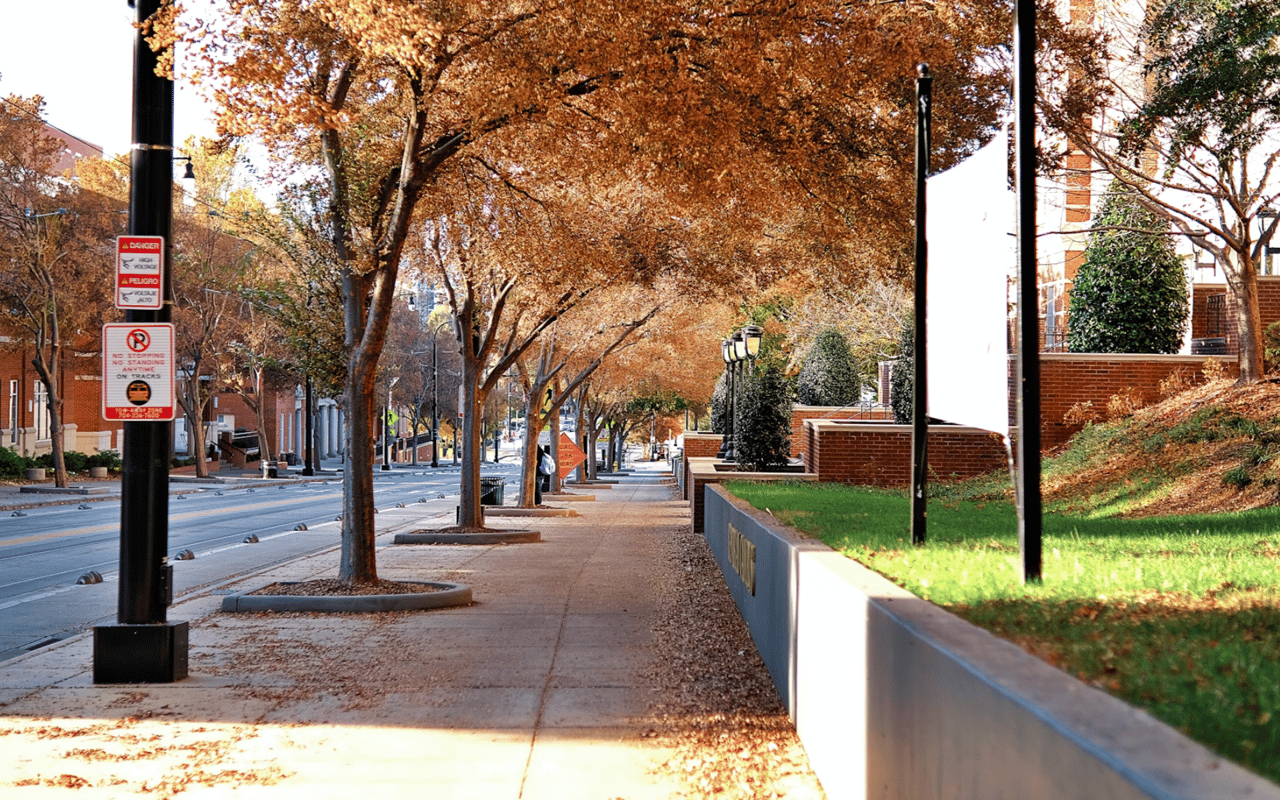
- Willow Oaks Canopy: The wide, winding boulevards were intentionally designed by John Nolen to showcase massive willow oaks that now form a world-famous green cathedral.
- Hermitage Road: This exclusive street is home to the historic Duke Mansion and features a collection of homes so prestigious that they are often referred to by their original owners' names.
The intentional curves of these roads were meant to slow down traffic and create a tranquil, park-like environment for the city's early elite.
The Names Of The Four Wards
Uptown Charlotte is uniquely divided into four distinct "wards" by the central intersection of Trade and Tryon.
Characteristics Of The Four Wards
- First Ward: Known as the Garden District, this area features a beautiful tree canopy and the 7th Street Public Market, blending urban density with park-like serenity.
- Second Ward: Formerly a bustling residential area, it now houses the city's government center and the NASCAR Hall of Fame, serving as a hub for civic life.
- Third Ward: This westside district is the epicenter of Charlotte sports, featuring Bank of America Stadium and the beautiful Romare Bearden Park.
- Fourth Ward: Famous for its collection of restored Victorian homes and cobblestone-style accents, this ward preserves the residential charm of the 19th century.
These neighborhoods provide a secure and stable foundation for professionals seeking high-performance luxury condos in the heart of the city.
FAQs
Why do some Charlotte streets change names at almost every intersection?
Many of our thoroughfares, such as the sequence of Tyvola, Fairview, and Sardis, were originally separate farm roads that were eventually connected as the city expanded.
What are some of the best Charlotte streets fun facts for history buffs?
One of the most interesting facts is that Tryon Street was built along a Native American path that predates European settlement by centuries.
Is the "Booty Loop" in Myers Park a formal street name?
No, the "Booty Loop" is a local nickname for the three-mile circuit consisting of Queens Road, Queens Road West, and Selwyn Avenue.
Contact The Dearing Team Today
If Charlotte streets fun facts sparked ideas about where to focus a home search, we would love to turn that curiosity into a smart, neighborhood-specific plan. We help clients compare blocks, corridors, and micro-markets across Charlotte with a clear strategy, so each tour day feels purposeful and aligned with real priorities.
Reach out to us at The Dearing Team for a tailored approach that matches lifestyle goals with the right street-level details, from classic boulevards near Dilworth to energetic corridors near NoDa and South End.